
I wrote a book!
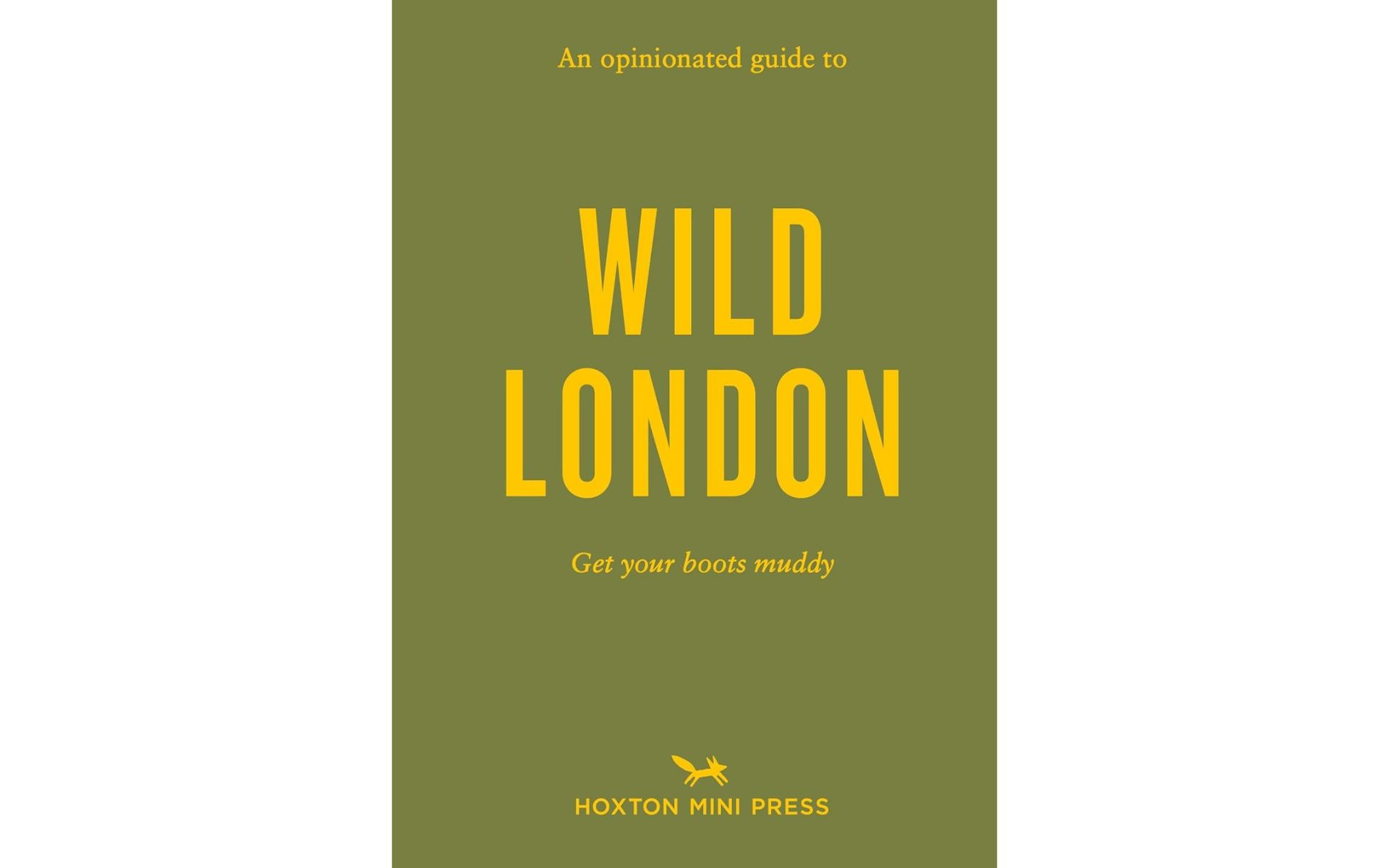
An Opinionated Guide to Wild London comes out March 12 from Hoxton Mini Press.

Quick note on the voiceover: It’s me, not AI! As such, this human author regrets an embarrassing factual error discovered too late to re-record: The Battle of Hastings was in 1066, not 1086. That was the year of the Domesday Book, which is also referenced everywhere all the time. So, perhaps you can see how easily this mistake could be made. Anyway: Parks! I digress.
Hello from London!
I’m back on this side of the pond with some really exciting news: I wrote a book! After many, many years of dreaming about writing for the “Opinionated Guide” series from Hoxton Mini Press, a local publisher, I’ve finally got my own title to add to their collection: An Opinionated Guide to Wild London.
At a time when it so often feels like the world is crumbling around us, researching this book gave me so many reasons to feel hopeful about where we are right now and what our future looks like. That might sound certifiably unhinged, but listen: Did you know London is greener and wilder today than it was 100 years ago, and possibly even 1,000 years ago?
To write this book, I visited dozens and dozens of places in every corner of the city and well beyond. Throughout late summer and fall, I trekked miles along the Wandle Trail, Green Chain Walk, and the Hogsmill River, where John Everett Millais painted “Ophelia.” I spent entire days hiking between green patches I’d scouted on Google Maps and I got very muddy. I drank an awful lot of tea on these journeys and ate a lot of scones with clotted cream. The best ones were at the farm shop for Architect’s Holiday, which has gorgeous woodsy cabins in Battle, south of London*.
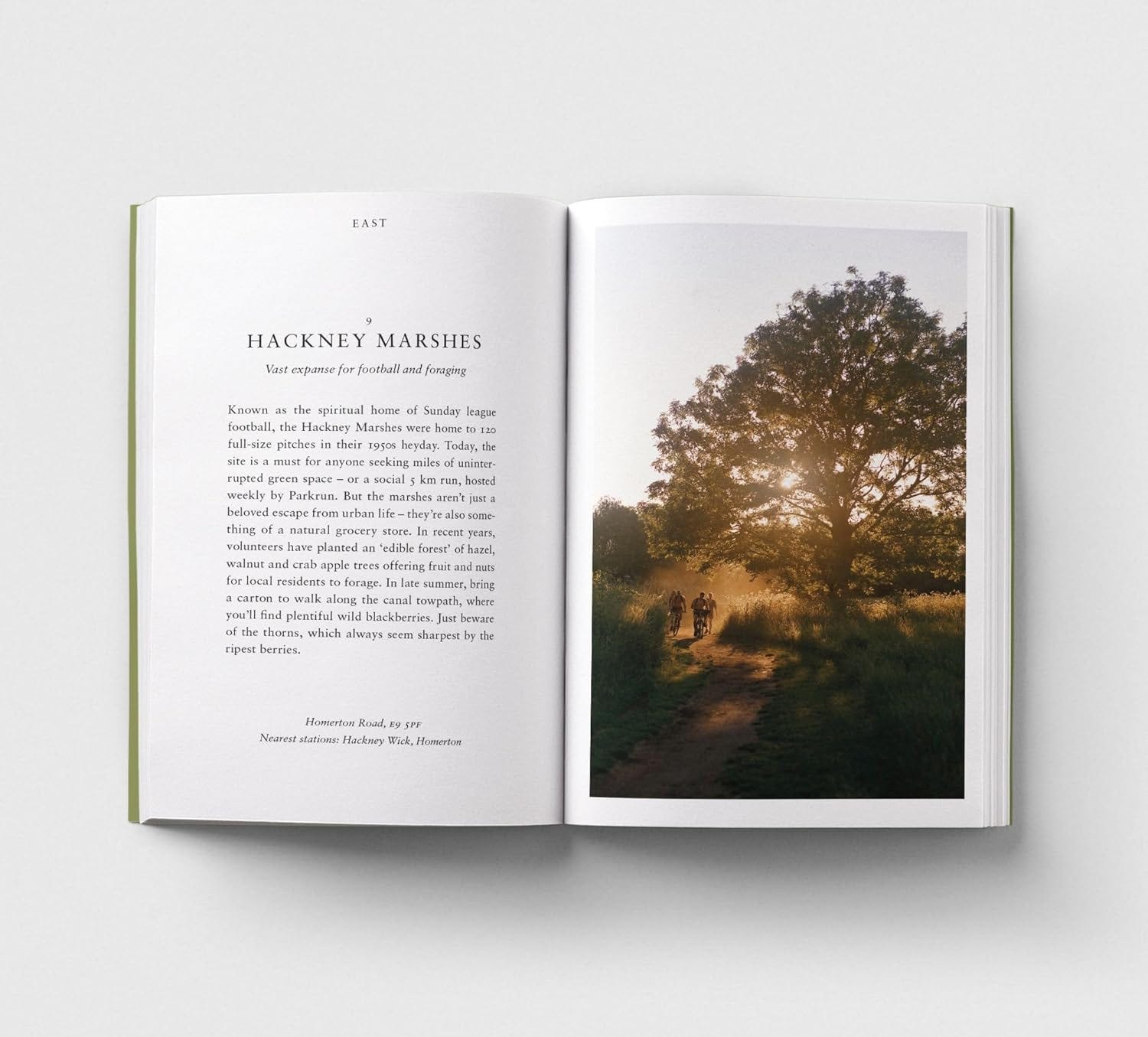
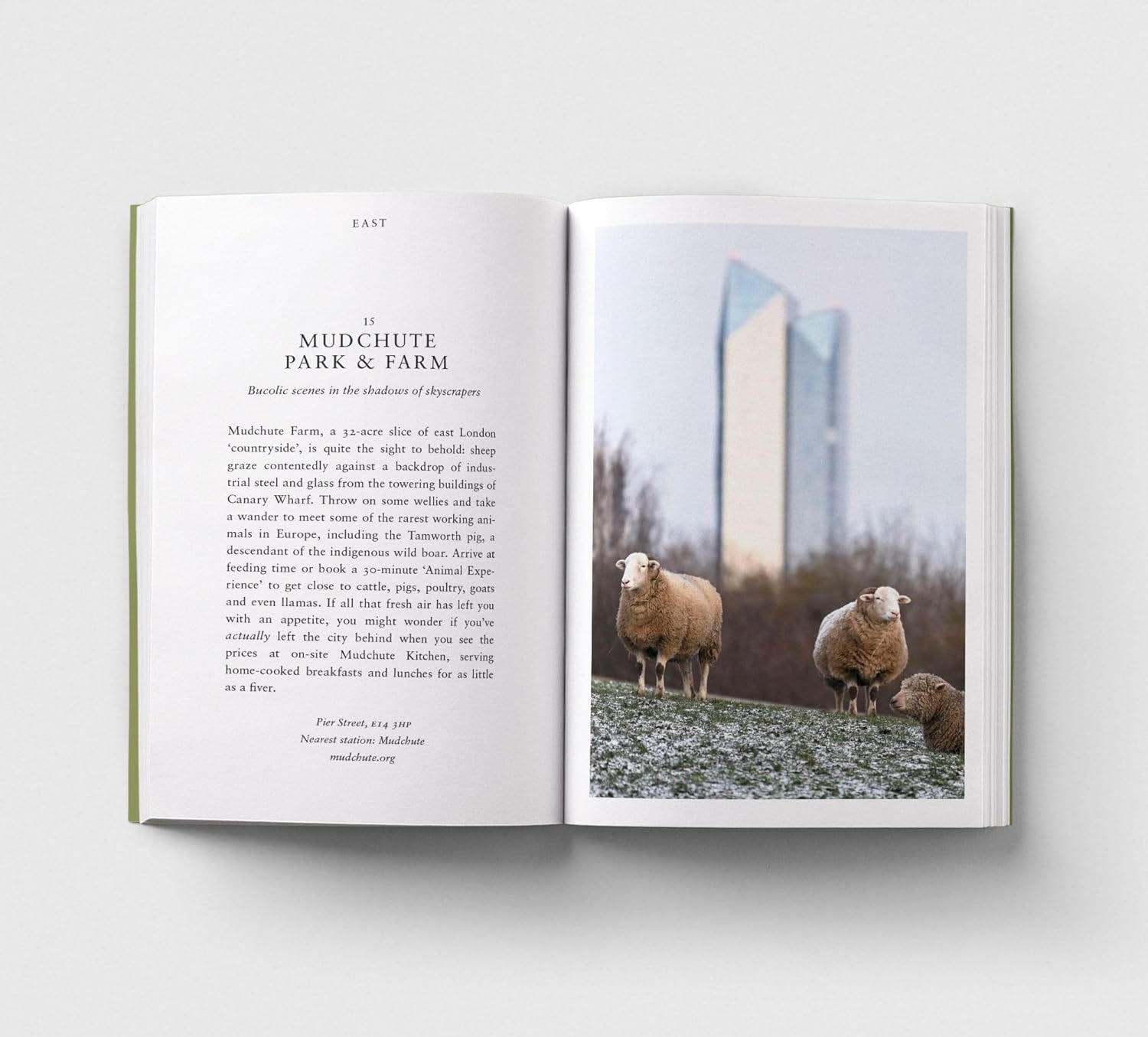
As I researched the history of each place, I was shocked to learn that many of them were industrial, urban, or agricultural mere years ago. There’s a lot of talk in the UK about “ancient woodlands,” but a forest need only be 400 years old to qualify as “ancient.” That’s nothing in a country with government buildings twice as old.
In Medieval times, trees were felled for fuel and timber with such alarming speed that people got scared by the disappearing forests. Parliament passed a series of conservation acts as early as the 1500s, desperate to slow down the rate of consumption.
Can you imagine? This wasn’t some far-off existential fear that people were reading about online. This was something happening around them so visibly, they didn’t need analysts to tell them to be afraid.
I listened to a fantastic RadioLab episode about this last year which really put our current situation into perspective. Yes, we’re running out of crucial minerals and fuel we need for everyday life, and that’s terrifying. But also, we’ve been here before. The very idea of woodland was endangered centuries before we figured out that doctors should wash their hands with soap after touching corpses (I am not joking).
I share all of this because I think it’s important to remember that our problems change shape as the eons pass, but they are always echoes from a not-too-distant past. Some things never change: We’re all still bumbling along trying to figure things out, and we’ve pretty much felt like the end of the world could arrive any day—any second—for at least the last 2,000 years.
Before we made forests extinct, we changed course at the last possible second. Laws were passed, charcoal-hungry blast furnaces were shut down. Ironically, we started burning coal in a conservation effort to further protect the trees, but that’s another story. The point is, there is hope. We’ve done horrible things to the environment for centuries, and now we’re working hard to restore nature. And we’re really, truly getting somewhere.
I’ll leave you with a challenge: Think about the last park, garden, or wild space you visited. Do you know how it came to be whatever it is today? Do some digging. Maybe your favorite patch of forest has always been forest, but maybe there was a time when it was nearly turned into condos or an office park, and it took local fundraising to save it from development. Learning these stories can help us identify and prepare for future threats to our natural spaces, and protect them for generations to come.
I used to think of nature as something far away, something that surrounds a city but never ventures inside of it. London has changed that for me. Now, I believe the opposite: Nature is everywhere, all the time. We’re just visiting.
Thanks, as always, for reading. Now get out there and go wild! (And pre-order my book, pretty please; it will make me very happy, especially if you order from one of these delightful affiliate links which will share commission with me.)
P.S. A note for my North American friends: the book hits shelves in the UK on March 12, and will be published in the U.S. later this year. If you don’t want to wait for it to make its way across the pond on its own, you can order it with international shipping from Amazon.co.uk.
Excessive and unnecessary footnotes:
*Yes, that’s the town of Battle, as in, “of Hastings.” I have to admit I have no idea if this is a Very British Reference or if it’s one that will land on both sides of the pond? My Very American boyfriend is Very Into British history and, as such, my once-sharp compartmentalization of what’s U.S.-centric knowledge vs. UK-centric knowledge has grown very disorganized, confuddled, and lazy. Anyway, in 1066, there was a battle in Battle. It’s called the Battle of Hastings**, even though Hastings is an entirely different city. I cannot explain this to you except to just shrug and say, “the Brits! What are they like?”***
**Very American Boyfriend has explained the Battle of Hastings to me many times and would be disappointed/mortified/disgraced if he were to learn that I had to Google it in order to explain it to you, so instead I’m going to let you enjoy researching it yourself. Someone got stabbed in the eye and it was a whole big thing. Gnarly battle; changed the world as we know it. The end.
***I’m pretty sure is British slang for “so sue me,” but cannot be entirely sure and ANYWAY we have gotten VERY FAR AWAY FROM PARKS NOW and all I wanted to say is that Architect’s Holiday has excellent scones and you should go there and eat them. I hope this footnote footnote makes David Foster Wallace roll in his grave.

This looks great! Congrats on the book.
Congrats! Can’t wait to read